
A patch of fuzzy black growth in the corner of your bathroom or behind a wardrobe is more than just an eyesore; it is a signal that your home’s ecosystem is out of balance. The culprit? Excess moisture. The cure?
In this guide, we will explore why air movement is your best defence against fungal growth and the top solutions to keep your home dry, healthy, and mould-free.
Why Is Ventilation to Reduce Mould So Important?
Mould spores are everywhere, but they need three things to thrive: moisture, warmth, and organic material (like wallpaper or wood). While we can’t easily change the materials our homes are built from, we can control humidity. When air becomes stagnant, moisture from cooking, showering, and even breathing settles on cold surfaces as condensation. Without proper ventilation, this moisture seeps into walls and furnishings, creating a “petri dish” environment for mould to take hold. This is why early intervention and professional support, such as our Mould Removal for Landlords & Letting Agents service, is essential to prevent minor condensation issues from turning into costly structural damage or tenant complaints.
Top 5 Ventilation Solutions for Your Home
If you are serious about using it, you need to look beyond just opening a window for five minutes. Here are the most effective mechanical and natural solutions:
PIV Systems (Positive Input Ventilation)
Installed in the loft, this system supplies fresh, filtered air and reduces condensation across the home.
Best for: Existing homes with loft space
MEV & dMEV (Mechanical Extract Ventilation)
Low-energy fans that run continuously to remove moisture from kitchens and bathrooms.
MVHR (Heat Recovery Ventilation)
Provides fresh air while retaining heat.
Best for: New builds and major renovations
Passive Stack Ventilation
Uses natural airflow to remove warm, moist air through roof vents.
Trickle Vents & Air Bricks
Small vents in windows that allow constant airflow to help reduce mould.
Improve Airflow with Simple Habits
Daily habits affect ventilation as much as hardware. Keep a gap of 5cm between furniture and walls to let air circulate, and close kitchen doors while cooking with the extractor on to contain steam.
Small Changes, Big Impact
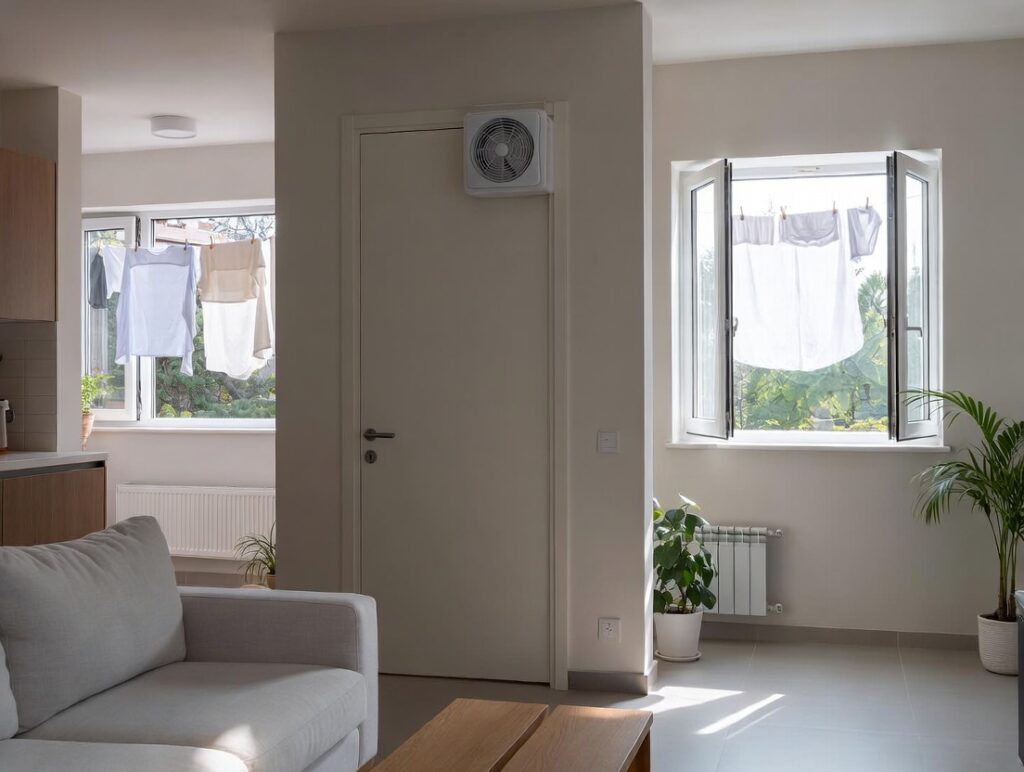
Dry clothes outside or use a dehumidifier indoors, and practice cross-ventilation by opening windows at opposite ends for 15 minutes to create a refreshing airflow and reduce mould.
The Cost of Ignoring Ventilation
Choosing not to prioritise can lead to more than just peeling paint. Mould exposure is linked to:
- Respiratory issues and asthma flare-ups.
- Allergic reactions and skin irritation.
- Structural damage to timber frames and plasterboard.
By ensuring consistent ventilation to reduce mould, you aren’t just protecting your property; you are protecting your family’s health.
Choosing the Right Solution for Your Property
The best ventilation to reduce mould depends on your property type:
- For Flats: Look into dMEV fans or wall-mounted PIV units if you lack a loft.
- For Period Homes: Focus on air bricks and ensuring original chimneys aren’t completely blocked off.
- For Modern Homes: Check that your trickle vents are actually open and functioning.
Expert Note: If you see black mould appearing despite having fans, your fans may be underpowered, or the ducting might be blocked. It’s worth having a professional airflow test to see if your current is actually hitting the required litres-per-second.
Final Thoughts
Mould is a symptom of a house that can’t “breathe.” By implementing the right, you move from reactive cleaning to proactive prevention. Whether it’s a high-tech PIV system or simply being more mindful of window vents, every bit of airflow counts.
Frequently Asked Questions
Does opening windows provide enough ventilation to reduce mould?
It helps temporarily, but mechanical ventilation ensures a consistent, year-round air exchange without losing all your indoor heat.
What is the most effective ventilation system for an old house?
A PIV (Positive Input Ventilation) system is ideal for older homes, as it replaces stagnant, damp air with fresh, filtered air throughout the building.
Can a dehumidifier replace proper ventilation?
No, a dehumidifier only collects water, whereas proper ventilation actively removes stale air and introduces fresh oxygen into the room, thereby reducing mould.
Why do I still have mould even though I have extractor fans?
The fans may be clogged, underpowered, or turned off too soon; they require consistent airflow and regular maintenance.
Are trickle vents necessary if I have double glazing?
Yes, because airtight windows trap moisture; keeping trickle vents open provides the essential background ventilation to reduce mould needed to prevent condensation.
Conclusion
Effective ventilation to reduce mould is the most sustainable way to protect your home’s structure and your family’s health. By choosing the right airflow strategy from PIV systems to simple trickle vents, you stop dampness at its source. At Mould Wise, we provide expert installations designed to keep your air fresh and your walls dry.
Ready to breathe easier? Mould Wise for a professional ventilation audit and say goodbye to mould for good!