
Condensation is more than just a morning annoyance on your bedroom windows; for those living in period properties, it’s a persistent battle against the British climate. Older UK homes weren’t designed for modern living; our airtight double glazing and central heating often clash with the “breathable” lime mortar and solid stone walls of the past. If you’re noticing damp patches or a musty scent, you aren’t alone. Understanding how to manage condensation in UK homes is the first step to protecting your property’s structural integrity and your family’s health.
Why Older UK Homes Suffer Most
Unlike modern cavity-wall builds, older homes often feature solid walls. When the temperature drops, these walls become cold “heat sinks.” When warm, moist air from cooking or showering hits these cold surfaces, it reverts to liquid.
Common Moisture Sources
Every day activities add significant moisture to your home. Drying clothes indoors can produce 2–5 litres of water, while cooking with gas adds 2–3 litres. Even breathing (two adults overnight) contributes about 1–1.5 litres, and taking a hot shower releases around 0.5 litres. Being aware of these sources helps you manage ventilation and reduce mould risk.
Actionable Strategies to Reduce Humidity
The goal is to balance Damp & Condensation Treatment with lifestyle adjustments that allow your home to breathe again.
Improve Ventilation
The most effective way to tackle condensation in UK homes is to give excess moisture a clear exit route. If you have uPVC windows, make sure trickle vents are kept open all year round so moist air can escape continuously. Bathrooms and kitchens should be fitted with humidistat-controlled extractor fans that keep running until the air is properly dry, rather than switching off too soon. On top of this, following the “10-minute rule,” opening windows at opposite ends of the house each morning helps quickly flush out stale, moisture-laden air without significantly cooling the building.
Consistent Heating Profiles
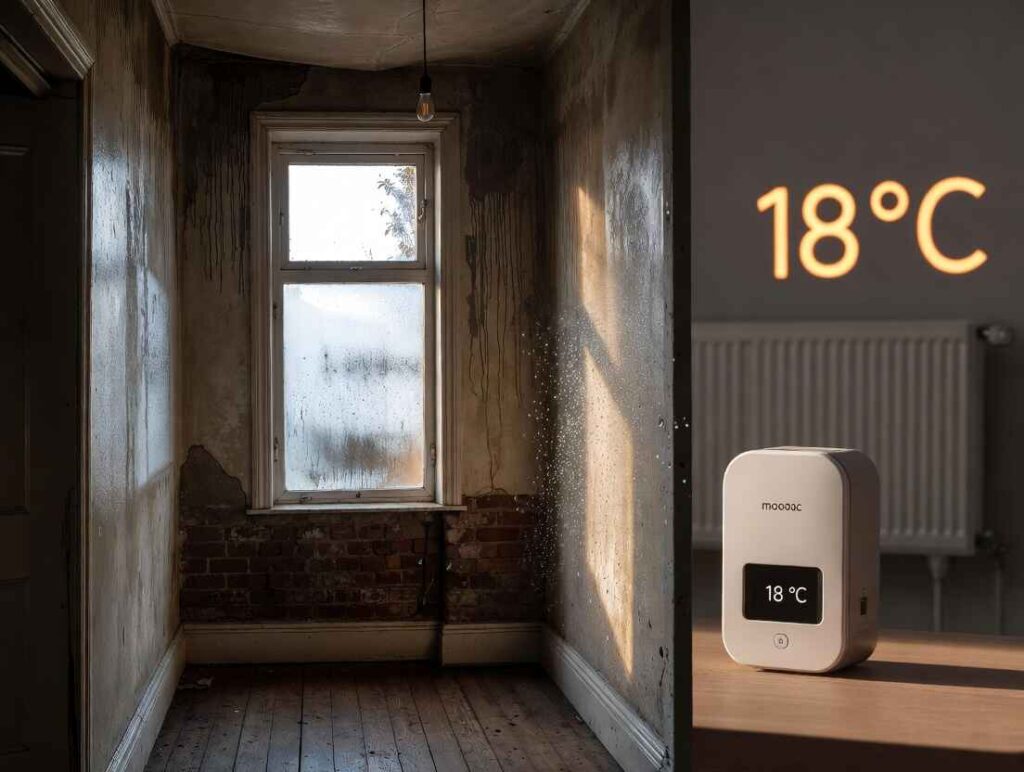
In older homes, “pulsing” the heat (turning it high for two hours then off) actually encourages condensation. As the air cools quickly, it drops its moisture onto the walls.
Expert Tip: Keeping your heating on a constant, lower setting (around 18°C) ensures the fabric of the building stays warm, preventing the “dew point” from being reached on wall surfaces.
Manage Furniture Placement
In many UK terraces, wardrobes are pushed tight against external walls. This creates “dead air” zones where mold thrives.
- Create Air Gaps: Leave at least a 50mm gap between furniture and external walls.
- Avoid Overfilling: Air needs to circulate inside cupboards to prevent damp clothes.
Insulation: The Double-Edged Sword
While adding loft insulation is vital, be wary of DIY projects that block eaves or soffit vents. In condensation UK homes, blocking these vents traps moisture in the roof timber, leading to dry rot. Always ensure a clear path for airflow from the outside.
When Lifestyle Changes Aren’t Enough
Sometimes, the building’s fabric requires professional intervention. Persistent dampness despite good ventilation may indicate a “cold bridge” or a failure in the original damp-proof course. In these instances, specialist coatings or PIV (Positive Input Ventilation) systems may be required to force a constant flow of fresh air through the property.
FAQ’s
Does dehumidifier use help with condensation?
Yes, they extract physical litres of water from the air, but they are a “bandage” rather than a permanent cure for poor ventilation.
Why is my bedroom window wet every morning?
As you sleep, your breath releases moisture into a cold room; without a vent or open window, it hits the glass and liquefies.
Can damp-proof paint stop condensation?
No. Damp-proof paint blocks liquid water from entering, but can actually make condensation worse by creating a cold, non-breathable surface.
Will double glazing solve my damp issues?
Not necessarily. While the glass stays warmer, the moisture will simply migrate to the next coldest surface, often the corners of the ceiling.
What is the ideal humidity level for a UK home?
You should aim for between 40% and 60%. Anything consistently over 70% significantly increases the risk of black mold growth.
Conclusion
Tackling moisture in a period property requires a blend of modern tech and traditional understanding. By maintaining steady heat and ensuring air can circulate, you can protect your home from the silent damage of damp. If you’ve tried these steps and are still struggling with persistent spots, let the experts at Mould Wise provide a permanent solution. Visit us for a professional Damp & Condensation Treatment assessment today and breathe easy again.