
Managing a rental property in the UK comes with a significant list of legal duties, but few are as critical or as scrutinised as moisture control. If you are a property owner, understanding the landlord’s responsibilities for mould is no longer just about property maintenance; it is a matter of legal compliance and tenant safety. With recent legislative shifts, the “lifestyle” excuse blaming tenants for drying clothes indoors or not opening windows is increasingly rejected by courts and ombudsmen. Today, the burden is firmly on the landlord to ensure the building can handle modern living without becoming a health hazard.
The Legal Framework: What the Law Says
In the UK, several key pieces of legislation dictate landlord responsibilities for mould. These laws ensure that every tenant has the right to live in a home that is safe and dry.
Section 11 of the Landlord and Tenant Act 1985
This is the cornerstone of repair obligations. It mandates that landlords must keep the structure and exterior of the property in good repair. This includes roofs, gutters, and external pipes. If mould is caused by a leaking roof or a cracked wall, it is legally the landlord’s duty to fix the source and the resulting damage.
The Homes (Fitness for Human Habitation) Act 2018
This Act requires that all rented homes are fit for human habitation from the start of the tenancy through to the end. Damp and mould are specifically listed as hazards that can make a property “unfit.” If the mould is severe enough to impact a tenant’s health, you are in breach of this Act.
Awaab’s Law (2025/2026 Update)
Following the tragic death of Awaab Ishak, new regulations have introduced with strict timescales for social landlords, which are now setting the standard for the private sector. Landlords must investigate reported mould within 14 days and begin repairs shortly after if a health risk is identified.
Identifying the Cause: Is it the Building or the Tenant?
Determining a landlord’s responsibilities for mould often begins with a professional survey, as not all types of damp are treated the same under the law.
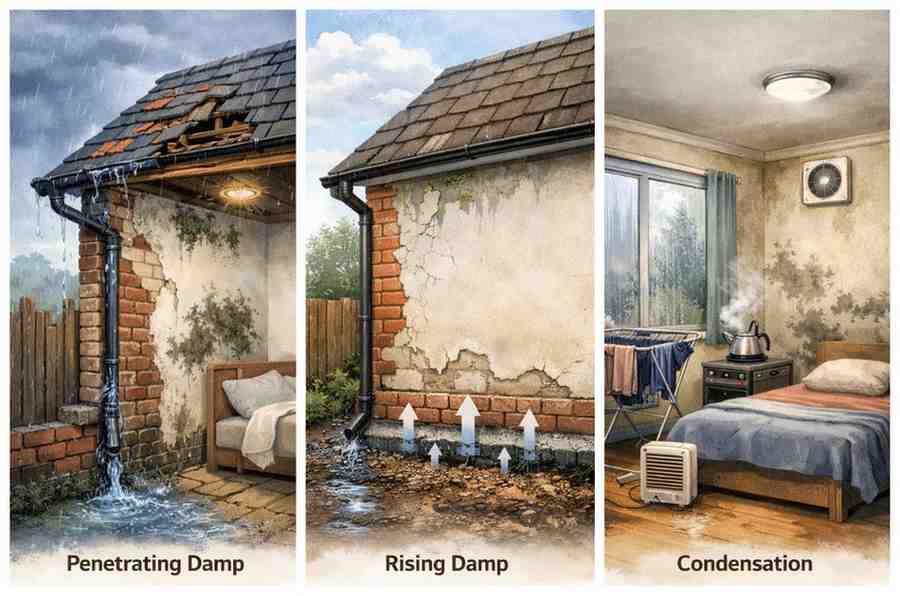
Penetrating Damp
Occurs when water enters from outside due to leaking roofs, blocked gutters, or cracks in walls. It can cause damp patches, peeling paint, and damage to plaster or wood. Fixing it is the landlord’s responsibility.
Rising Damp
Happens when moisture from the ground rises up through walls due to a missing or damaged damp-proof course (DPC). It can cause peeling paint, damp patches, and structural damage. The landlord is responsible for fixing it.
Condensation
Usually stems from poor ventilation, lack of insulation, or inadequate heating, and responsibility is often shared between the landlord and tenant, depending on the circumstances.
Preventing Damp and Mould: Landlord Responsibilities
Landlords must not assume that damp and mould are caused by ‘lifestyle’ factors. The property must be equipped with adequate ventilation and heating systems to prevent moisture build-up during normal daily activities.
If your property suffers from chronic condensation, simply telling a tenant to “open a window” may not be enough. You may need to provide Mould Removal for Landlords & Letting Agents to address the root causes, such as installing PIV systems or humidistat-controlled extractor fans.
Actionable Steps for Landlords
To stay compliant and protect your investment, follow this expert checklist for managing landlord responsibilities for mould:
- Inspect Regularly
Don’t wait for a complaint. Check bathrooms, kitchens, and behind large furniture during mid-term inspections. - Act Fast
When a tenant reports an issue, respond in writing within 24 hours to acknowledge the report and schedule an inspection. - Ensure Adequate Ventilation
Verify that extractor fans in high-moisture areas (kitchens and bathrooms) are functional and powerful enough for the room size. - Professional Assessment
If mould returns after cleaning, hire a specialist to check for structural issues or thermal bridging.
Document Everything
Keep a paper trail of all reports, inspections, and repairs to defend against potential disrepair claims.
FAQs
Who is responsible for mould caused by condensation?
The landlord must provide adequate ventilation and insulation; tenants must use them correctly.
Can a tenant sue me for mould in the UK?
Yes, under the Homes (Fitness for Human Habitation) Act, if mould affects health or safety.
How long do I have to fix a mould problem?
Investigate within 10–14 days; urgent health risks should be fixed immediately.
Do I have to provide a dehumidifier?
No legal requirement, but it can prevent damage while waiting for repairs.
Is mould considered a “Category 1” hazard?
Yes, severe mould is a Category 1 hazard under HHSRS, requiring immediate action.
Conclusion
Navigating landlord responsibilities for mould requires a proactive approach and a commitment to tenant safety. By addressing damp issues early and ensuring your property meets modern ventilation standards, you protect both your tenants’ health and your financial assets. If you’re struggling with persistent dampness or need a professional assessment to ensure your property meets UK standards, Mould Wise is here to help. We provide expert advice and comprehensive solutions to keep your rentals compliant and mould-free.