
Finding a dark spot on your drywall or catching a whiff of a musty scent in the basement is enough to make any homeowner anxious. In a DIY-obsessed world, your first instinct might be to grab a bottle of bleach and a scrub brush. However, mould is rarely just a surface issue. Understanding why professional mold inspections matter is the difference between a temporary fix and a permanent solution. Below, we dive into the hidden dangers of mould, the limitations of DIY testing, and why a professional eye is your best defense.
The Invisible Threat: What You Can’t See Can Hurt You
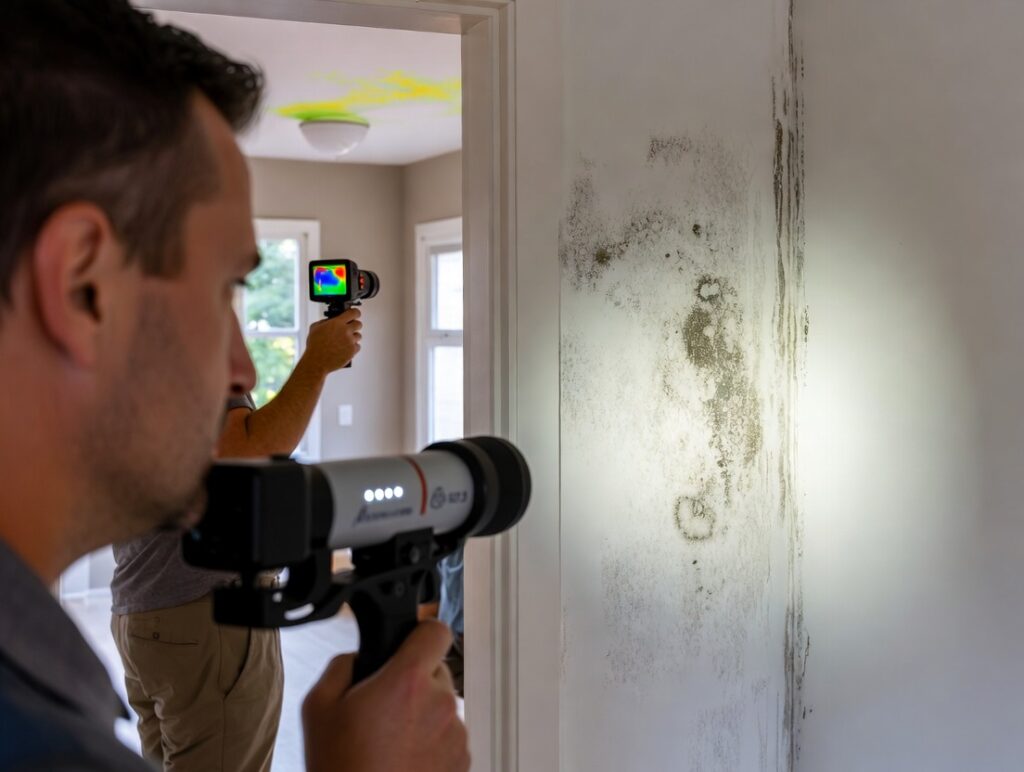
Mould isn’t always a visible patch of black fuzz. In fact, some of the most dangerous infestations occur behind “the scenes” inside wall cavities, under floorboards, or within HVAC ductwork. Mould spores are microscopic. By the time you see physical growth, the colony is likely well-established. A professional Mould Inspection and Testing uses advanced technology like thermal imaging and moisture meters to detect dampness behind walls without tearing your house apart.
Health Risks of Ignoring Mould
Living with mould isn’t just an aesthetic problem; it’s a health hazard. Exposure can lead to:
Respiratory Issues
Mould spores can irritate your lungs, causing coughing, wheezing, or throat discomfort. People with asthma or respiratory conditions are especially at risk, but even healthy individuals can experience breathing problems with prolonged exposure.
Allergic Reactions
Exposure to mould can trigger sneezing, runny nose, itchy eyes, or skin rashes. Those with allergies, children, or the elderly may have stronger reactions.
Toxic Effects
Certain toxic moulds, like Stachybotrys chartarum, produce mycotoxins that may lead to more severe neurological or systemic health problems.
DIY Kits vs. Professional Accuracy
You’ve likely seen “instant” mold test kits at the hardware store. While they seem cost-effective, they are notoriously unreliable. Mould spores exist in the air everywhere. A DIY petri dish kit will almost always grow something, but it won’t tell you the concentration levels or whether the species present are dangerous. Professionals provide:
- Species Identification: Knowing exactly what type of mould is present.
- Spore Count Comparison: Comparing indoor air samples to outdoor baseline samples to see if your home has an active “bloom.”
- Root Cause Analysis: A kit won’t tell you why the mould is growing. An inspector will find the leaking pipe or the condensation point causing the issue.
Protecting Your Property Value
If you are planning to sell your home, a history of moisture issues can be a deal-breaker. Conversely, having a professional “clearance” report can provide peace of mind to potential buyers. Professional mould inspections matter because they provide a documented trail of due diligence. If you’ve had a leak or flood, an inspection proves that the remediation was successful and the air quality is back to safe levels. Ignoring a small patch of mould today can lead to structural rot that costs tens of thousands of dollars to repair down the road.
The Science of the Inspection Process
A professional mold inspection involves more than just walking around with a flashlight. The process includes several technical steps to ensure a thorough assessment. First, a visual assessment is conducted using high-powered LEDs and boroscopes to identify both visible mold growth and hidden entry points. Next, moisture mapping with infrared cameras helps locate “cold spots” that indicate moisture behind surfaces. Air sampling using spore traps captures air volumes to count spores per cubic meter, providing insight into airborne contamination. Finally, surface sampling with swabs or tape lifts confirms the exact species of any visible colonies, allowing for precise identification and targeted remediation.
Tailored Remediation Plans
The biggest mistake homeowners make is cleaning mould without fixing the water source. If you scrub mould away but leave a slow-dripping pipe, it will return within 48 to 72 hours. When you hire a professional, you receive a detailed Remediation Protocol. This is a roadmap for how to fix the problem correctly. It ensures that you (or a contractor) don’t accidentally spread spores throughout the house by turning on fans or failing to set up proper containment.
Peace of Mind for Your Family
Ultimately, the most significant reason professional mould inspections matter is the psychological relief they provide. Home should be a sanctuary, not a place that makes you feel ill.
Make Confident Decisions with Professional Reports
Whether you are a landlord ensuring a safe environment for tenants or a parent concerned about a child’s asthma, a professional report gives you the facts. You move from guessing and worrying to acting with confidence.
FAQs
Can I perform a mould inspection myself?
You can spot visible growth, but professional mould inspections matter because experts use thermal imaging to find hidden spores and moisture behind walls that DIY checks miss.
How long does a typical mould inspection take?
A standard professional inspection usually takes 1 to 2 hours, depending on the size of the property and the number of air samples required.
Is testing necessary if I can already see the mould?
Yes, because visual checks don’t identify the mould species or toxicity level. Testing determines if the air quality is hazardous and if spores have spread to other rooms.
What is the difference between inspection and remediation?
Inspection identifies the root cause and extent of the problem, while remediation is the actual removal process. You must inspect first to ensure the cleanup is effective.
How soon will I receive the final lab results?
While visual findings are immediate, detailed laboratory analysis for air and surface samples typicallytakes 2 to 3 business days to complete.
Conclusion
Mould is a biological reality, but it doesn’t have to be a disaster. By investing in a professional assessment, you are choosing to protect your health, your finances, and your home’s structural integrity.
If you’ve experienced a recent leak, noticed a strange smell, or see suspicious spotting, now is the time to act. Mould Wise specializes in comprehensive environmental testing to ensure your indoor air is clean and safe.